| The short answer | Yes — sitting all day can contribute to nerve pain, tingling and numbness by compressing nerves, slowing circulation to the legs, and letting posture muscles weaken. It is one of the most common everyday triggers of a numb backside and buzzing legs. |
| Why it happens | Sustained pressure on a nerve, reduced blood flow from staying still, and a slumped posture that loads the lower back and hips. |
| What helps | Move for a couple of minutes every 30 to 60 minutes, fix your chair and posture, uncross your legs, stretch, and support your nerves with good nutrition. |
Most of us sit far more than our bodies were built for — commuting, working, scrolling, relaxing. If you finish the day with a numb backside, tingling legs or an aching, buzzing feeling that eases the moment you stand, you have probably wondered: does sitting all day cause nerve pain? The short answer is that prolonged sitting is a genuine, common contributor to nerve discomfort, and the good news is that the fixes are almost all within your control.
This guide explains the three main ways sitting bothers your nerves, the everyday habits that make it worse, and a practical set of changes — posture, movement and nutrition — that help keep signals flowing cleanly.
Sitting is not inherently harmful in short bursts. The trouble is the sustained, unbroken hours. Three things stack up.
A hard seat, the edge of a chair, crossed legs, or even a thick wallet in a back pocket can press directly on a nerve or the blood vessels feeding it. Hold that pressure long enough and the nerve stops signalling normally — compression being one of the recognised causes of peripheral nerve symptoms listed by the National Institute of Neurological Disorders and Stroke. This is the familiar pins-and-needles of a limb “falling asleep.” It usually clears fast once you move, but repeated day after day it becomes a nuisance.
Your leg muscles act as a pump that pushes blood back toward the heart, and that pump only works when you move. Sit still for hours and circulation to the legs slows, so nerves and tissues get a less steady supply of oxygen and nutrients. That can leave the legs feeling heavy, cold or tingly.
Slumping for hours shortens some muscles and switches others off, which loads the lower back and hips. Over time this can irritate the nerves that travel from the spine down into the legs, producing an aching or shooting discomfort that a better setup often relieves.

A few common habits quietly amplify the problem:
The most effective plan is a stack of small habits rather than one big fix.
This is the number-one lever. Aim to stand and move for a couple of minutes at least every 30 to 60 minutes — refill your water, walk a lap, roll your shoulders. Frequent short breaks beat one long walk at the end of the day. A gentle timer helps until it becomes automatic.
Support the natural curve of your lower back, keep your feet flat, and raise your screen to eye level. Remember that the best posture is your next posture — variety matters more than any single perfect position. Alternating between sitting and standing, if you can, spreads the load.
Gentle hip, hamstring and glute stretches through the day keep the tissue around your nerves supple. A little core and glute strengthening supports better posture over time. Our guide to the best exercises for nerve health and circulation has simple moves you can do at a desk.
You do not need a gym or a change of clothes to break up a long sitting session. A handful of small movements, done through the day, keep circulation flowing and take pressure off the nerves in your hips and legs:
Tie these to things you already do — a stretch every time you finish a call, calf raises while the kettle boils — and they quickly become automatic.
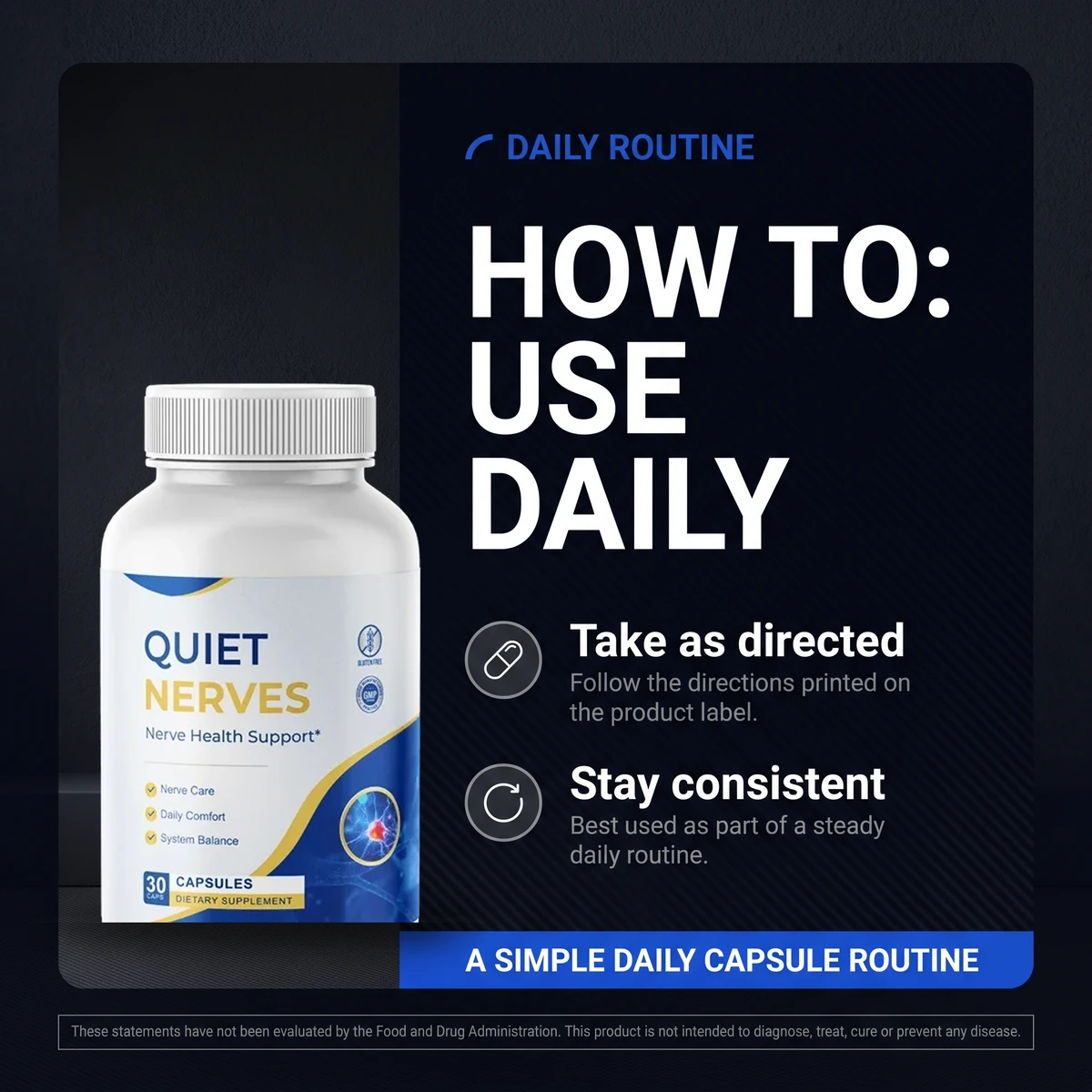
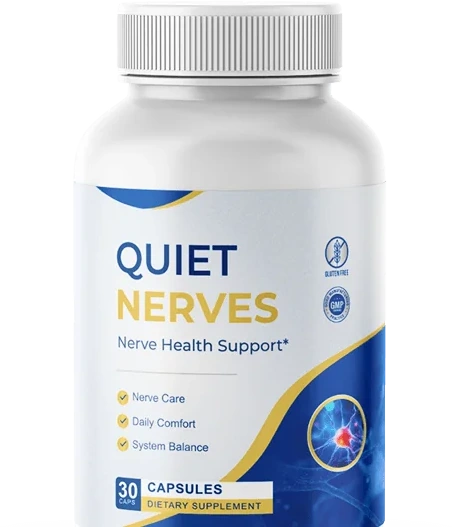
Quiet Nerves is a once-daily capsule that names six ingredients: magnesium glycinate, alpha lipoic acid, butcher’s broom, L-carnitine, turmeric and coenzyme Q10. It contains no B vitamins or calming botanicals, the brand has not published the amounts, and every pack carries a 60-day guarantee from the purchase date.
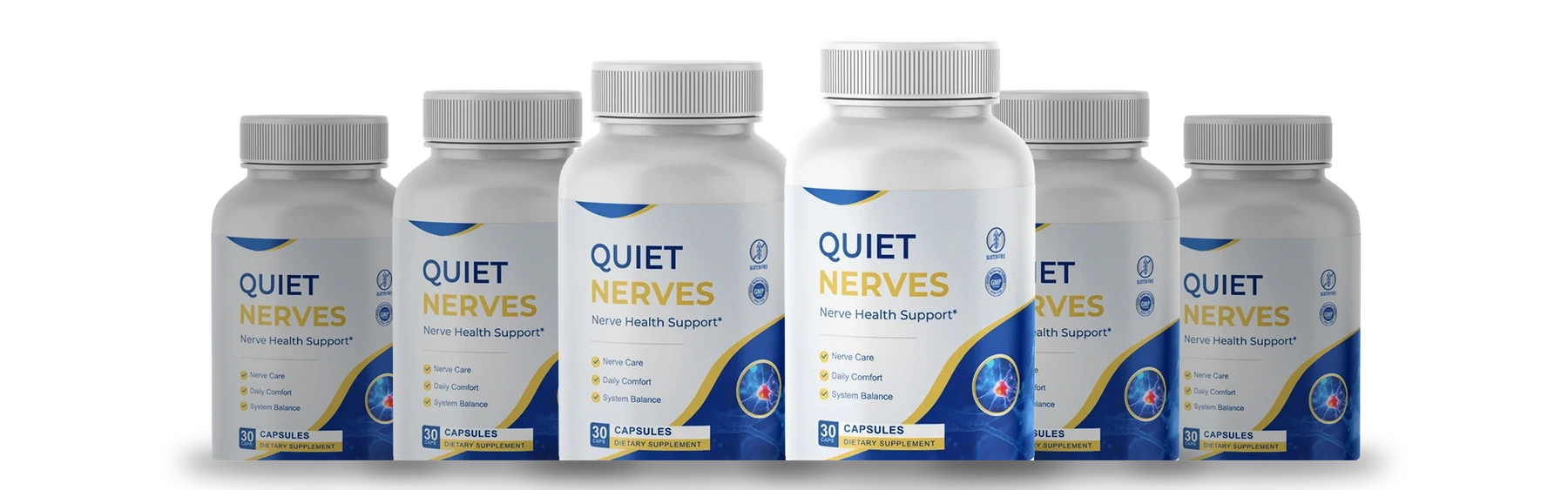 See Quiet Nerves Packages
Nerves and the circulation that feeds them run on good nutrition. Magnesium supports calm nerve-and-muscle signalling, B-vitamins help maintain healthy nerve tissue, and staying well hydrated keeps blood flowing. Building meals around whole foods — the kind covered in our guide to the best foods for nerve health — gives your body the raw materials, and a daily supplement such as Quiet Nerves, which names magnesium glycinate among its six ingredients, can sit alongside that diet. Give any new routine several weeks, and remember that individual results vary.
Two aggravating factors sit either side of the working day. Overnight, short or broken sleep lowers the threshold at which the nervous system registers discomfort, which is the mechanism behind the observation that poor sleep makes nerve pain and tingling worse the following afternoon. And in winter, a cold office compounds a circulation problem you already have from sitting — one reason nerves feel worse in cold weather for people who spend the day at a desk.
Occasional pins-and-needles that clear when you move are usually just pressure. But see a clinician if numbness or pain is persistent, spreading, one-sided, or comes with weakness, or if it does not settle when you change position. Shooting pain down a leg, or any loss of bladder or bowel control, needs prompt medical attention. This article is general information for healthy adults, not a diagnosis or treatment plan.
Prolonged sitting can contribute to nerve discomfort in a few ways: it can compress nerves against the chair or through tight muscles, it slows circulation to the legs, and it lets the muscles that support good posture weaken. The result can be tingling, numbness or an aching, pins-and-needles feeling, most often in the backside, hips and legs. Regular movement breaks are the simplest fix.
A hard or edge-of-seat chair, crossed legs, or a wallet in a back pocket can press directly on nerves and blood vessels, temporarily interrupting signals and circulation. That is the classic pins-and-needles you feel when a limb falls asleep. It usually clears quickly once you stand and move, but if it happens often or lingers, it is worth changing your setup and checking with a clinician.
A common, practical guideline is to move for a couple of minutes at least every 30 to 60 minutes: stand, stretch, walk to refill your water. Setting a gentle timer helps until it becomes a habit. Frequent small breaks tend to help nerves and circulation more than one long walk at the end of the day.
Yes, though the best posture is really your next posture. Supporting the natural curve of your lower back, keeping feet flat, and alternating between sitting and standing all reduce sustained pressure on any one area. Variety and movement matter more than finding one perfect position and holding it for hours.
See a clinician if numbness or pain is persistent, spreading, one-sided, or comes with weakness, or if it does not settle when you change position and move. Shooting pain down a leg or any loss of bladder or bowel control needs prompt medical attention. This article is general information, not a diagnosis.
† These statements have not been evaluated by the FDA. This product is not intended to diagnose, treat, cure or prevent any disease. It is general reading, not medical advice for your situation.
Text
Researched and written by the Quietnervese Editorial Team from the Quiet Nerves bottle, the brand’s own ingredient list and the agency and journal sources linked on the page.
Review
A second team member compares every figure and claim with its source before publication. No physician or pharmacist reviews these pages, so they are not medical advice.
Revision
. Found an error? Report it.
Have a doctor check any tingling, numbness or burning that has no known cause before you lean on a supplement; if weakness or numbness strikes one side of the body suddenly, call 911.
 Quiet Nerves