| The short answer | The best exercises for nerve health and circulation are gentle and regular: brisk walking, swimming, cycling, stretching, gentle nerve glides and balance work. They keep blood flowing to your nerves and activate the leg-muscle pump — consistency beats intensity. |
| Why it works | Movement improves circulation, supports steady blood sugar, and helps nerves stay supple, so signals travel more cleanly. |
| How to start | Aim for short, frequent bouts, build up slowly, avoid anything sharp, and pair movement with good nutrition and hydration. |
If you want one habit that quietly supports your whole nervous system, it is regular, gentle movement. When people ask about the best exercises for nerve health and circulation, they often imagine a punishing gym routine — but the truth is far kinder. What your nerves love is steady blood flow, and that comes from consistent, moderate activity you can actually keep up.
Your nerves depend on a good blood supply to deliver oxygen and nutrients and to carry waste away. Your leg muscles double as a pump that pushes blood back up toward the heart, and that pump only runs when you move. Sit still too long and everything slows; move regularly and the whole system flows. This guide walks through the most effective, accessible exercises and how to start safely.
Movement helps your nerves in several overlapping ways, and the weekly activity target most of this advice is built around — 150 minutes of moderate activity plus two strengthening sessions — comes from the federal Physical Activity Guidelines for Americans:

Rotate a few of these through your week. You do not need all of them — pick what you enjoy and will keep doing.
The simplest, most accessible option. A brisk daily walk gets the leg-muscle pump working and blood flowing without any equipment. Break it into short bouts if that is easier — three 10-minute walks count just as well as one 30-minute walk.
Water supports your body weight, so it is gentle on joints while still challenging your muscles and circulation. Water walking is a great starting point if impact bothers you.
A stationary or outdoor bike is low-impact and excellent for circulation in the legs, where tingling and heaviness are most often felt.
Calf, hamstring and hip stretches keep the tissue around your nerves supple. Gentle yoga adds breathing and relaxation, which calm the nervous system at the same time.
These are slow, gentle movements that coax a nerve to slide smoothly through surrounding tissue rather than catching. They should feel easy, never sharp. If you are unsure, a physiotherapist can show you the right ones for you.
Balance work and tai chi build steadiness and body awareness, which is especially valuable if nerve symptoms make your footing feel less certain. They are gentle, meditative, and easy to scale.
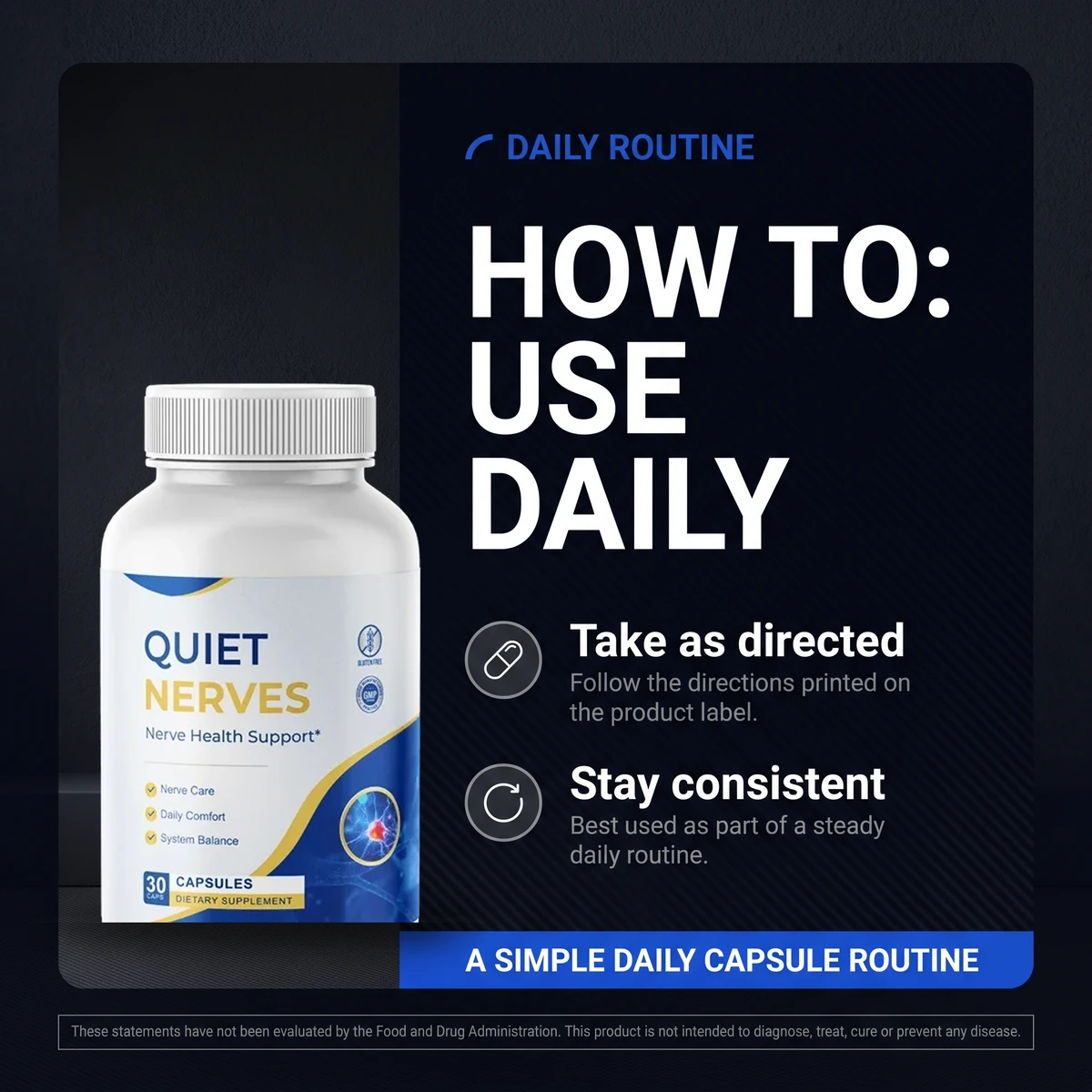
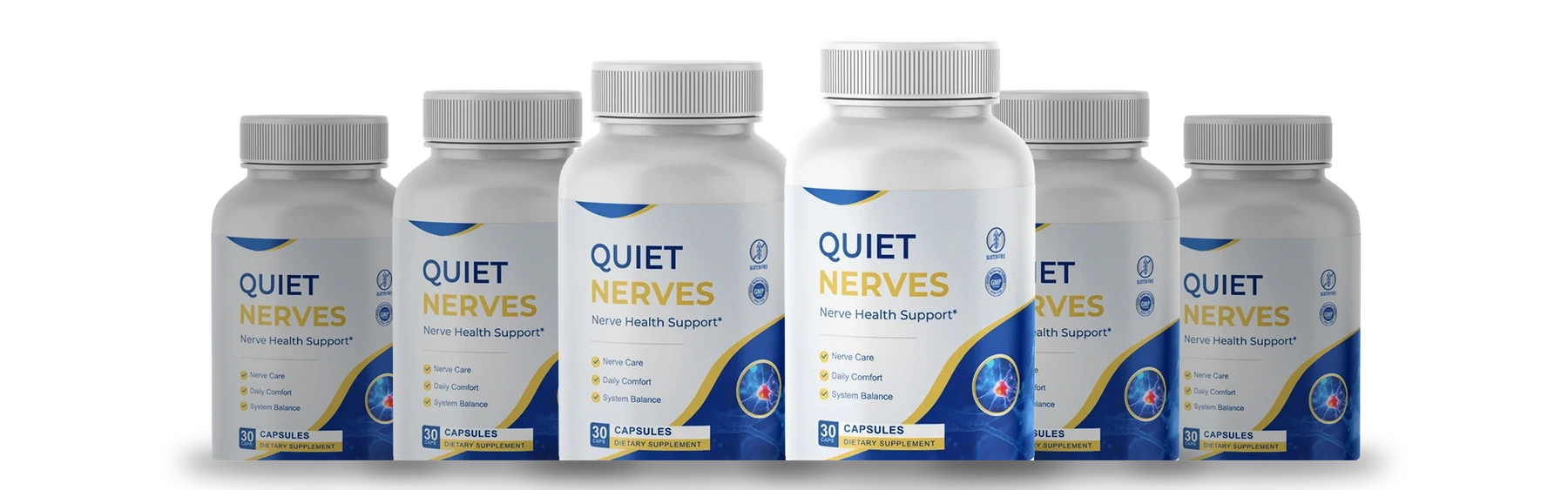
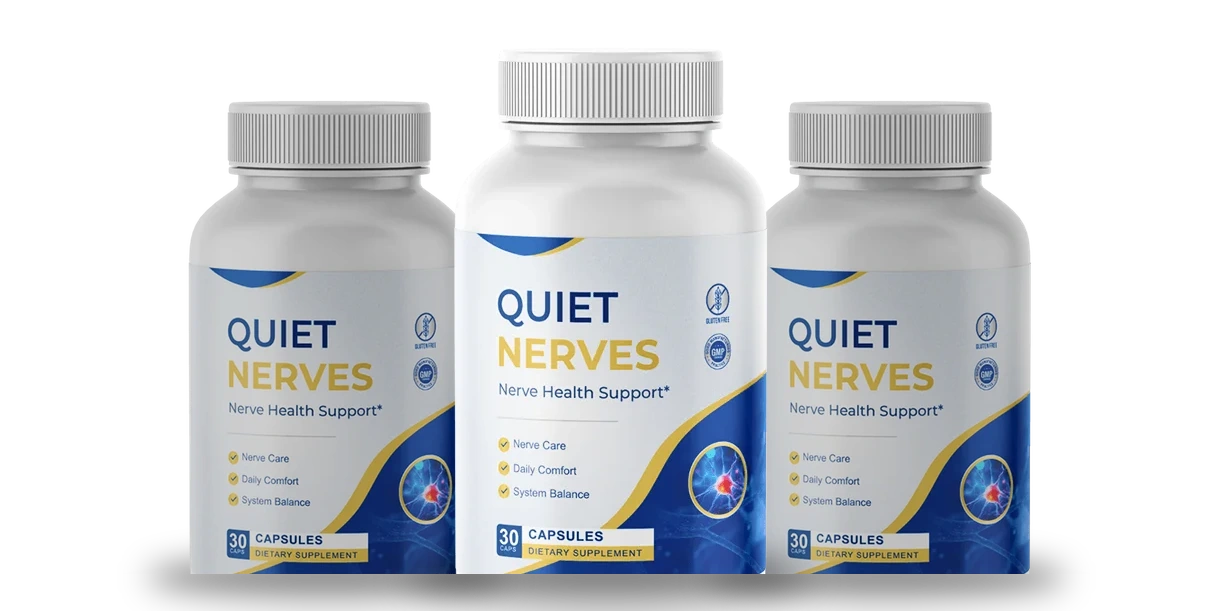
Quiet Nerves is a once-daily capsule that names six ingredients: magnesium glycinate, alpha lipoic acid, butcher’s broom, L-carnitine, turmeric and coenzyme Q10. It contains no B vitamins or calming botanicals, the brand has not published the amounts, and every pack carries a 60-day guarantee from the purchase date.
 See Quiet Nerves Packages
Two things reliably undo a good week of movement. The first is the weather: circulation to the hands and feet drops when it is cold, which is why so many people find nerve symptoms feel worse in cold weather and why a warm-up matters more in January than in June. The second is a mineral shortfall — the link between magnesium deficiency and muscle cramps is well recognised, and cramping calves in the middle of a walk will stop a routine faster than any lack of motivation.
The goal is to build a habit you can sustain, not to overhaul your life overnight:
If you like a little structure, here is an easy, flexible week that hits circulation, mobility and balance without taking over your life. Scale it up or down to suit you:
Notice how modest this is. The magic is not intensity — it is showing up regularly so blood keeps flowing to your nerves week after week. If long hours at a desk are your main obstacle, our guide on whether sitting all day causes nerve pain has quick fixes you can use between sessions.
Movement is the foundation, and nutrition supports it. Magnesium is central to relaxed nerve-and-muscle signalling, B-vitamins help maintain healthy nerve tissue, and antioxidants like alpha-lipoic acid are traditionally valued for nerve support. Quiet Nerves lists magnesium glycinate and alpha lipoic acid among its six ingredients but no B vitamins, so it covers part of that list, not all of it. Give any new routine several weeks, stay consistent, and remember that individual results vary.
Check with a clinician before starting a new exercise plan if you have existing nerve symptoms, heart or circulation conditions, or reduced sensation in your feet. And see someone if any symptom is persistent, spreading, one-sided or worsening, or if movement makes it sharply worse. This article is general information for healthy adults, not a diagnosis or a personalised exercise prescription.
Gentle, regular movement wins: brisk walking, swimming or water walking, cycling, simple stretching, gentle nerve glides, and balance work like tai chi. These keep blood flowing to nerves, support the leg-muscle pump that returns blood to the heart, and help nerves stay supple. Consistency matters far more than intensity.
Movement boosts circulation, so nerves receive a steadier supply of oxygen and nutrients, and it activates the calf and thigh muscles that pump blood back up from the legs. Regular activity also supports healthy blood sugar and helps manage stress, both of which are good for nerves. Even short, frequent bouts of movement add up.
Nerve glides, sometimes called nerve flossing, are gentle movements that coax a nerve to slide smoothly through the surrounding tissue rather than getting stuck. Done slowly and without forcing, they can help some people who feel tightness or tingling. They should feel gentle, never sharp, and are best learned from a physiotherapist if you are unsure.
General guidance for adults is about 150 minutes of moderate activity a week, plus a couple of sessions that include some strengthening and balance. You do not have to do it all at once. Short walks, desk stretches and stair-climbing throughout the day all count toward keeping blood flowing and nerves happy.
Avoid anything that provokes sharp, shooting or worsening symptoms, and build up gradually rather than pushing through pain. If you have reduced sensation in your feet, choose low-impact options and check your feet for injury. Always clear a new exercise plan with a clinician if you have existing nerve symptoms or health conditions. This article is general information, not medical advice.
† These statements have not been evaluated by the FDA. This product is not intended to diagnose, treat, cure or prevent any disease. It is general reading, not medical advice for your situation.
Text
Researched and written by the Quietnervese Editorial Team from the Quiet Nerves bottle, the brand’s own ingredient list and the agency and journal sources linked on the page.
Review
A second team member compares every figure and claim with its source before publication. No physician or pharmacist reviews these pages, so they are not medical advice.
Revision
. Found an error? Report it.
Have a doctor check any tingling, numbness or burning that has no known cause before you lean on a supplement; if weakness or numbness strikes one side of the body suddenly, call 911.
 Quiet Nerves