| The short answer | Feet tingle at night mainly because pressure, posture and slower circulation combine with fewer daytime distractions — so the nervous system’s signals feel louder once you lie down. |
| Common triggers | Pressure on a nerve, tight or cold feet, dehydration, low magnesium or B12, and a day spent sitting or standing in one position. |
| What helps | Move and stretch before bed, loosen footwear, stay hydrated, steady your blood sugar, and cover the key nerve nutrients day to day. |

It is one of the most common questions people ask about their nerves: why do my feet tingle at night when they felt perfectly normal all day? You get into bed, the house goes quiet, and within a few minutes your soles or toes start to prickle, buzz or feel faintly “electric.” It can be mildly annoying or genuinely distracting when you are trying to fall asleep.
The good news is that occasional nighttime foot tingling is usually explained by everyday, fixable things — the way you were sitting, how well your feet were circulating, what you ate and drank, and the simple fact that your nervous system has fewer things to pay attention to once you stop moving. This guide walks through why it happens and the practical habits that help calm it.
That pins-and-needles feeling has a name — paraesthesia, one of the sensory symptoms the National Institute of Neurological Disorders and Stroke describes when it sets out how peripheral nerves misfire. It happens when the sensory nerves that carry information from your skin to your brain fire in a slightly disorganised way. Most of us have felt the dramatic version after sitting on a foot: a limb “falls asleep,” then wakes up with a rush of prickling as normal signaling returns. Nighttime foot tingling is usually a gentler, slower cousin of the same thing.
Nerves are demanding tissue. They fire constantly, and to do that cleanly they rely on a steady supply of oxygen, a stable position that is not squashing them, and specific nutrients. When any of those slip, the signal can get noisy — and a noisy signal is exactly what tingling is.
If the sensation is worse in bed than at your desk, several things are stacking up at once.
During the day your brain is flooded with input — sights, sounds, movement, tasks. At night that flood slows to a trickle, so faint sensations that were always present suddenly have the stage to themselves. Many people do not develop new tingling at night; they simply notice tingling that daytime busyness was masking.
When you are still, blood flow to the feet slows a little, and body temperature shifts. Lie in one position for a while and you may also put quiet, sustained pressure on a nerve — a leg crossed over the other, an ankle pressed into the mattress, or a foot tucked under you. That pressure is a classic trigger for tingling that fades the moment you move.
Feet that spent the day in tight shoes, standing on hard floors, or crammed into one position under a desk can “report back” in the evening once you finally rest. Evening is also when blood sugar can dip and when a day’s worth of mild dehydration adds up — both of which the nervous system notices.

None of these is a diagnosis — think of them as the usual suspects worth ruling out before anything else:
If your tingling is mild, occasional and clearly linked to one of these, the everyday steps below are a sensible place to start. For a deeper look at the nutrients involved, see our companion guide on how to support nerve health naturally.
Because nerves are living tissue, what you feed them matters. Three groups do most of the heavy lifting:
Magnesium is involved in healthy signaling between nerves and muscles and in that settled, relaxed feeling — which is why low magnesium so often shows up as restlessness and prickling. B-vitamins, especially B6 and B12, help maintain nerve tissue and the protective sheath around each nerve; B12 is one of the most common gaps in older adults. Antioxidants such as alpha-lipoic acid and curcumin (the active compound in turmeric) are used to help defend nerves against the everyday oxidative “wear and tear” of metabolism.

You can cover a lot of this at the table — leafy greens, nuts and seeds, beans, fish, eggs and colourful produce — and top up any gaps where your diet falls short.
Try building a few of these into the last hour before bed:
Restless legs and tingling feet often travel together in the evening. If a can’t-keep-still feeling is part of your picture, our guide to what causes restless legs at night covers the triggers and calming habits in detail. And if you also wake with pins-and-needles in your hands, see numb hands while sleeping: causes and simple fixes.
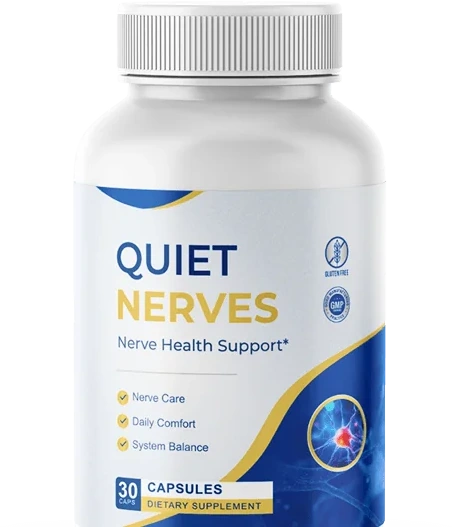
Quiet Nerves is a once-daily capsule that names six ingredients: magnesium glycinate, alpha lipoic acid, butcher’s broom, L-carnitine, turmeric and coenzyme Q10. It contains no B vitamins or calming botanicals, the brand has not published the amounts, and every pack carries a 60-day guarantee from the purchase date.
 See Quiet Nerves Packages
Food first is always the right starting point. But if your diet has narrowed, your appetite is smaller than it used to be, or you simply want to make sure the key nutrients are covered day to day, a well-formulated nerve-health supplement can help fill the gaps. The advantage of a single daily capsule is consistency — it is far easier to keep up than a shelf of separate bottles. Quiet Nerves brings six named ingredients into one capsule, though B12 and calming botanicals are not among them.
Whatever you choose, give it time. Nutrient support builds gradually, so most people give a consistent routine several weeks before deciding how they feel — and everyone is different, so individual results vary.
Everyday, occasional foot tingling that fits the patterns above is usually nothing to worry about. But natural, at-home support is not a substitute for medical care. See a clinician if your tingling is new and persistent, getting worse, one-sided, or paired with weakness, pain, numbness or balance problems — and especially if you have diabetes or take regular medication. Sudden or severe symptoms deserve prompt attention. When in doubt, get it checked.
During the day, movement and activity keep blood flowing and give your brain plenty of other input to process. At night you are still, circulation slows a little, and there are fewer distractions, so the buzzing or prickling sensations that were always there simply become easier to notice. Sustained pressure from your sleeping position can also press on a nerve and set off tingling that eases once you shift.
It can be one factor. Magnesium supports healthy nerve-to-muscle signaling and B12 helps maintain the protective coating around nerves, so a shortfall in either is a well-known contributor to tingling and prickling. Diet is the place to start, and a targeted supplement can help top up the gaps many diets leave, but nutrients are only part of the picture alongside posture, circulation and hydration.
Stand up and walk for a minute, roll your ankles, gently stretch your calves, and change position so nothing is pressing on the sole or side of your foot. Warm (not hot) feet, loose socks and a glass of water can help too. If a particular sleeping position keeps triggering it, experiment with a pillow under the knees or between the ankles.
Some tweaks, like changing your position or loosening tight footwear, can help the same night. Nutrient and habit changes work gradually — most people give a consistent routine several weeks before judging how they feel. Everyone is different and individual results vary.
See a clinician if the tingling is persistent, spreading, one-sided, or comes with pain, weakness, numbness or balance problems, and if you have diabetes or take regular medication. Sudden or severe symptoms always deserve prompt medical attention. This article is general information, not a diagnosis.
† These statements have not been evaluated by the FDA. This product is not intended to diagnose, treat, cure or prevent any disease. It is general reading, not medical advice for your situation.
Text
Researched and written by the Quietnervese Editorial Team from the Quiet Nerves bottle, the brand’s own ingredient list and the agency and journal sources linked on the page.
Review
A second team member compares every figure and claim with its source before publication. No physician or pharmacist reviews these pages, so they are not medical advice.
Revision
. Found an error? Report it.
Have a doctor check any tingling, numbness or burning that has no known cause before you lean on a supplement; if weakness or numbness strikes one side of the body suddenly, call 911.
 Quiet Nerves